Hay fever allergy season is not one clean block on the calendar. It is a sequence of pollen seasons that changes by plant type, city, weather, and the specific trigger your immune system reacts to.
That distinction matters if you are checking a broad allergy forecast and still wondering why your symptoms do not match the national pattern. A person reacting to cedar in Austin is not living through the same season as a person reacting to oak in Atlanta or ragweed near New York.
That is the gap pollen.day can own. A national hay fever calendar helps you understand the year, but a local pollen forecast tells you what is happening where you actually breathe.
If symptoms are already starting, check today's local pollen forecast first, then use this guide to understand which season you are likely in.
Hay Fever Season Depends on Your Trigger
Hay fever is another name for allergic rhinitis. Mayo Clinic describes it as cold-like symptoms such as runny nose, congestion, sneezing, itchy eyes, and sinus pressure caused by an allergic response rather than a virus (Mayo Clinic).
When people say "hay fever season," they usually mean outdoor pollen season. The American College of Allergy, Asthma & Immunology explains that seasonal allergy symptoms are commonly tied to pollen from trees, grasses, and weeds (ACAAI). The CDC also connects pollen exposure with hay fever symptoms and asthma symptoms in sensitive people (CDC).
The problem is that tree, grass, and weed pollen do not peak at the same time. They also do not peak the same way in every region.
That is why the better question is not "when is hay fever season?" It is "which pollen type is active in my area today?"
The Simple U.S. Hay Fever Calendar
Across much of the United States, the broad sequence is:
- Tree pollen: late winter through spring.
- Grass pollen: late spring through summer.
- Weed pollen: late summer through fall.
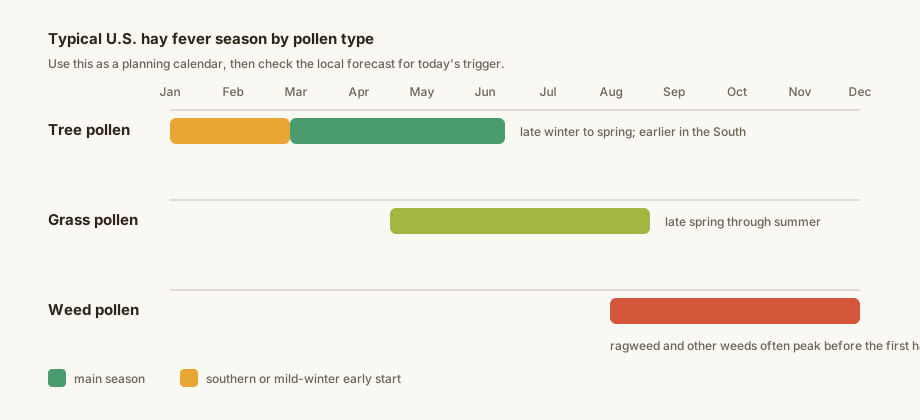
The AAAAI notes that outdoor allergens vary by region, and that many hay fever medications work best when started before pollen season begins (AAAAI). That makes the seasonal calendar useful as an early-warning system.
But the calendar is only a starting point. The same month can mean different pollen exposure in different places.
In a cold northern city, March may still be early tree season. In Texas, March can arrive after months of cedar exposure and begin to overlap with other tree pollen and grass pollen. In a desert city, winter and monsoon patterns can create a different rhythm entirely.
For a deeper month-by-month explainer, read pollen.day's guide to pollen seasons. If you already have a forecast open and want to interpret the score, use our pollen forecast guide.
Tree Pollen: The First Hay Fever Wave
Tree pollen often starts the hay fever year. Mayo Clinic lists tree pollen as a common early-spring trigger, while ACAAI notes that tree pollen can begin as early as January in the South (Mayo Clinic, ACAAI).
Common spring tree triggers include oak, birch, maple, cedar, juniper, ash, sycamore, elm, and mulberry. The exact mix depends heavily on local plantings and regional ecology.
This is where pollen.day's local angle matters. A national page can say "tree pollen peaks in spring," but that does not tell an Atlanta reader whether today's allergy count is driven by oak, pine, or a broader tree mix.
Atlanta is a good example because dense tree canopy can make the spring season feel sudden and intense. Austin is a different example because cedar and juniper exposure can start in winter before the rest of the spring tree season is underway. If cedar is your trigger, the Austin allergy forecast matters before many national calendars would tell you to pay attention.
For a trigger-specific breakdown, see pollen.day's tree pollen allergies guide.
Grass Pollen: The Middle of the Season
Grass pollen usually follows tree pollen. In many northern and central regions, the strongest grass window is late spring through early summer. In warmer southern areas, grass can start earlier and last longer.
ACAAI's pollen allergy guidance explains that grass pollen season is generally late spring and summer, with southern regions sometimes seeing longer or year-round grass exposure (ACAAI). That regional detail is important because people often treat "spring allergies" as if they are only tree pollen.
They are not.
If your symptoms flare when lawns are actively growing, when parks are being mowed, or when warm windy days follow a rainy growth period, grass pollen may be part of the picture. A local forecast helps separate a tree-pollen day from a grass-pollen day, especially during May and June when the two can overlap.
That overlap is one reason a single total pollen score can be frustrating. Two people can see the same "high" forecast and have different symptom days if one reacts to oak and the other reacts to Bermuda grass.
Weed Pollen: The Fall Hay Fever Return
For many people, fall hay fever means ragweed. The CDC says ragweed can produce a billion pollen grains per season and is a common fall allergy driver (CDC).
Ragweed is not the only weed pollen that matters. Mugwort, pigweed, Russian thistle, sagebrush, plantain, and other weeds can contribute depending on the region. Still, ragweed is the best-known fall trigger because it is widespread and its pollen can travel.
Fall is also where location changes the season shape. A person checking San Antonio allergies may see a longer warm-season mix than someone in a northern city where the first hard frost ends much of the weed-pollen period.
The practical takeaway: do not stop checking the forecast just because spring tree pollen is over. Hay fever can return in late summer and fall with a different trigger.
Why Location Changes the Season
The useful approach is to go local: location plus pollen type plus timing.
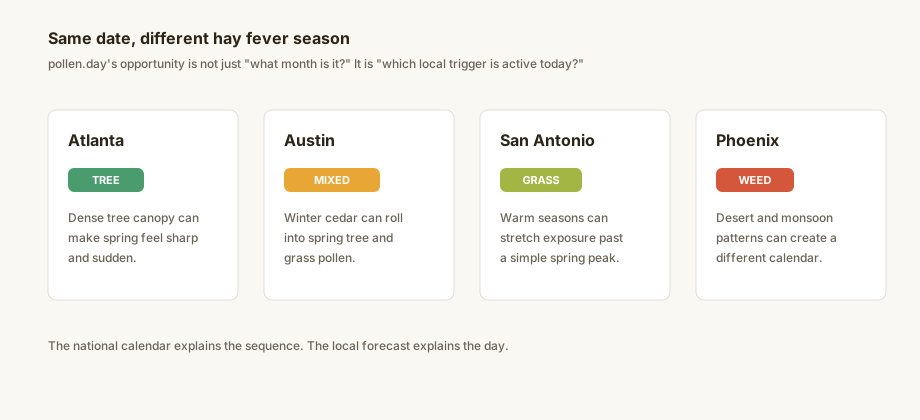
Here is how that looks in real examples:
- Atlanta allergy count: spring tree pollen can be the main story because of tree canopy and regional species mix.
- Austin allergy forecast: cedar and juniper can start earlier than a generic spring calendar suggests.
- San Antonio allergens: warm-season grass and weed exposure can stretch beyond a short spring window.
- Houston pollen forecast: humidity, mild winters, and Gulf weather patterns can blur clean seasonal boundaries.
- Phoenix pollen forecast: desert plants and rain timing can create patterns that do not match humid eastern cities.
This is why pollen.day's location pages are not just a CTA after the guide. They are the operational answer to the guide.
A static hay fever calendar tells you what usually happens. The local forecast tells you whether today is a tree, grass, weed, or mixed exposure day in your city.
How to Use a Forecast During Hay Fever Season
Use this simple workflow during hay fever season.
First, identify the pollen type that is active. If the forecast shows high tree pollen in March or April, the day may feel very different from a high grass-pollen day in June or a high weed-pollen day in September.
Second, compare the active pollen type with your symptom history. If you always flare in spring but not fall, tree pollen may be more relevant than ragweed. If you feel worse after lawn growth or mowing season begins, grass pollen may deserve more attention.
Third, use the forecast to change exposure. On high days, many public health and allergy sources recommend reducing pollen entry indoors, keeping windows closed, changing clothes after outdoor time, and discussing medication timing with a clinician if symptoms are recurring. Mayo Clinic also notes that allergy medicines may be taken before exposure when directed by a healthcare professional (Mayo Clinic).
The forecast is not a diagnosis. It is a planning tool.
If you are trying to interpret a score, start with how to read a pollen forecast. If you want the live local number, open today's forecast for your location.
Longer Seasons Are the New Baseline
Hay fever season is not standing still.
CDC warns that climate change may increase pollen concentrations and extend pollen seasons, which can increase allergy and asthma symptoms in sensitive people (CDC). NIEHS similarly notes that seasonal allergies, also known as allergic rhinitis or hay fever, affect a large share of Americans and that pollen season patterns are shifting (NIEHS).
The strongest study-level citation is the 2021 PNAS paper by Anderegg and colleagues. Using long-term data from 60 North American stations from 1990 to 2018, the authors found widespread pollen-season lengthening and higher pollen concentrations across North America (PNAS).
For readers, the point is simple: old calendars can understate the current season.
A calendar can still tell you the order: trees, then grasses, then weeds. But a forecast is more useful when seasons start early, overlap, or stretch later than expected.
This is especially important in markets pollen.day can serve well: places where national allergy content is too generic, but daily local conditions are what people actually need.
What to Do Next
If you landed here because symptoms started this week, do not stop at the calendar. Open pollen.day's location directory, choose your city, and check whether tree, grass, or weed pollen is driving today's forecast.
If you are planning ahead, save three guides:
- Understanding pollen seasons for the full yearly pattern.
- How to read a pollen forecast for daily score interpretation.
- Tree pollen allergies if your symptoms start early in the year.
Hay fever season is easier to manage when you know two things: the seasonal backdrop and the local trigger. pollen.day is built for the second part.
FAQ
When is hay fever allergy season?
In much of the United States, hay fever season starts with tree pollen in late winter or spring, continues with grass pollen in late spring and summer, and often returns with weed pollen in late summer and fall. Local timing can shift by weeks.
Is hay fever the same as seasonal allergies?
Hay fever is a common name for allergic rhinitis. It is often used for seasonal allergies triggered by pollen, although similar symptoms can also come from indoor allergens.
Which pollen causes hay fever in spring?
Spring hay fever is usually linked to tree pollen, including oak, birch, maple, cedar, juniper, and other regional trees. In warmer areas, grass pollen may overlap with late tree pollen.
Why is hay fever season different in Austin, Atlanta, and San Antonio?
Each city has a different climate, plant mix, and weather pattern. Austin can have winter cedar pollen, Atlanta often has a strong spring tree-pollen season, and San Antonio can see longer warm-season grass and weed exposure.
Should I check pollen count or pollen forecast?
Use both if available. A pollen count reports what was recently measured, while a pollen forecast helps you plan the next day or week based on weather, season, and expected pollen movement.
Can hay fever season last all year?
Yes, in mild-winter or southern regions, pollen exposure can occur in many months of the year. The active pollen type may change even when symptoms feel similar.